
Since this was coursework, I can’t make the project code public. Please reach out privately if interested!
About#
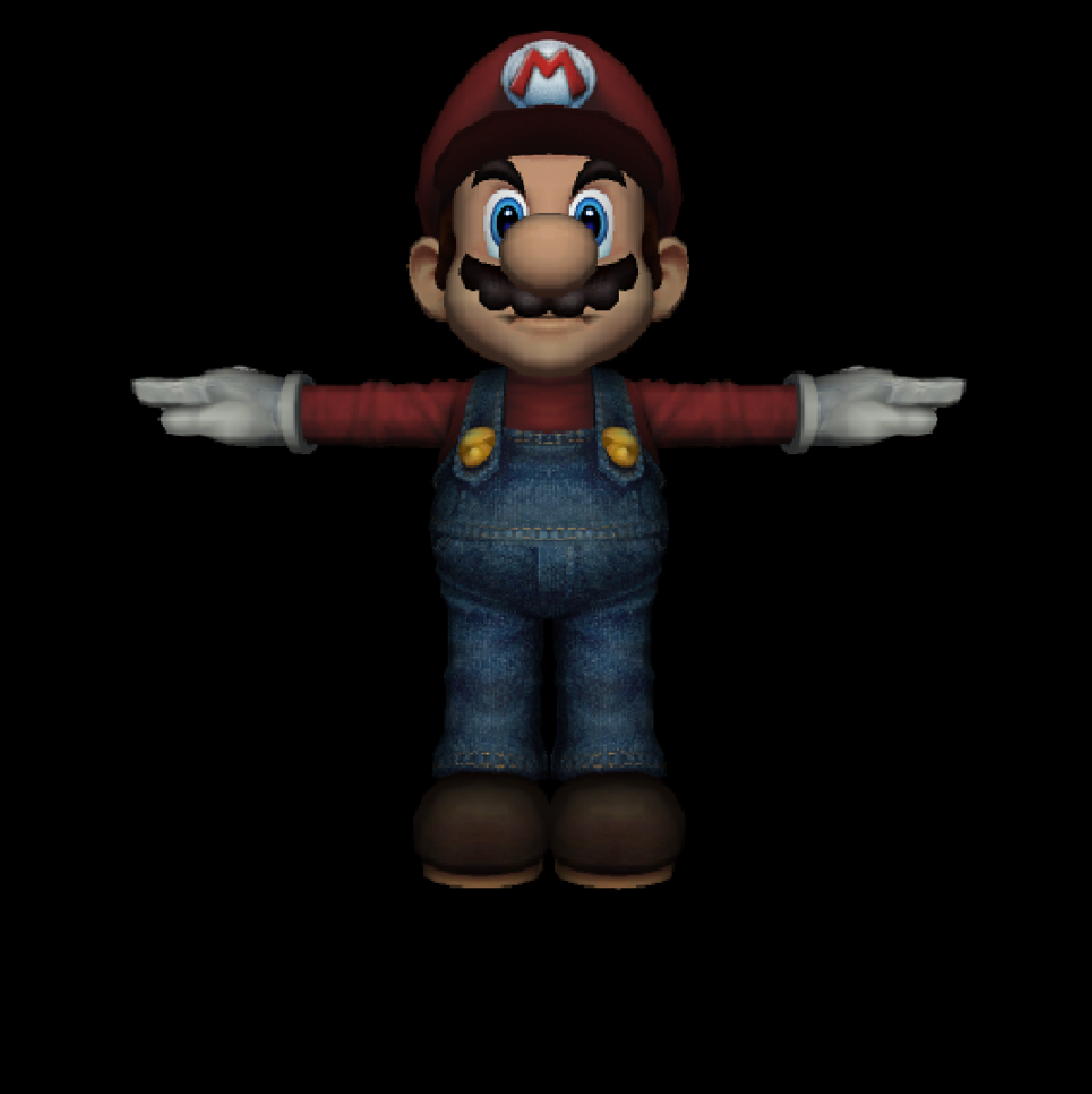
For Introduction to Computer Graphics, I implemented a CPU rasterizer with lambertian reflections, wireframe rendering, and FSAA.
Features#
Basic Rasterization Features#
- Coordinate Transformations The rasterizer follows the world coordinates -> camera coordinates -> normalized device coordinates -> pixel coordinates sequence of transformations.
- Triangle Rasterization
- Perspective-Correct Attribute Interpolation Using the formula for perspective-correct attribute interpolation, I interpolated vertex attributes such as UV coordinates and normals, allowing for objects to be textured and shaded using techniques like Lambertian reflections.
Additional Features#
- Lambertian Reflections Using Lambert’s Law of Cosines with interpolated fragment normals, I implemented Lambertian reflections with the camera as the light source.
- Wireframe Rendering By changing the triangle testing to only fill the edges, the rasterizer will render wireframes instead of full faces.
- 2x Full Scene Anti-Aliasing (FSAA)